

Basic Japanese phrases for travel
26 phrases · pronunciation · native-speaker audio
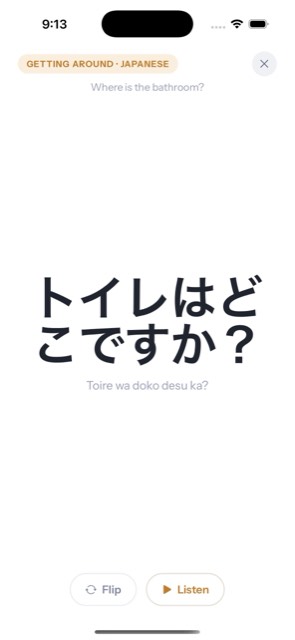
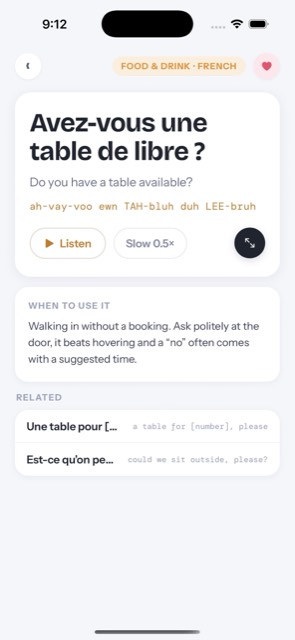
Heading to Japan? These are the 26 phrases worth knowing before you land. The greetings and small courtesies that come up on day one, starting with “こんにちは”. Every one shows how it's written, how to say it, and has audio you can play.
Japanese isn't written in the Latin alphabet, so every phrase below also carries a Latin-letter version — labelled Rōmaji — alongside a plain-English guide to saying it out loud.
These are free here and free in the app, in every language. Nothing to sign up for.
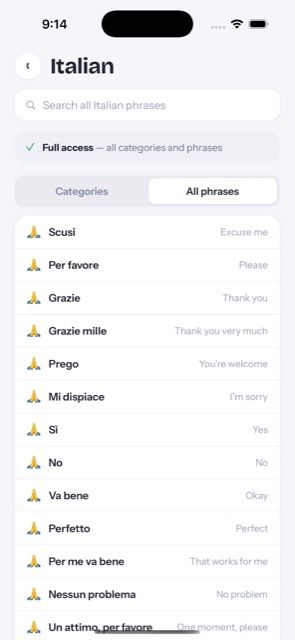
Essentials
-
Excuse me
すみません
Rōmaji Sumimasen
soo-mee-mah-sen
The universal opener, great for getting a waiter’s attention, stopping a stranger for directions, or squeezing past someone on the metro. Lead with it and everything after goes smoother.
The most useful word in Japan: excuse me, sorry, and thank-you-for-the-trouble all at once. Works on everyone.
-
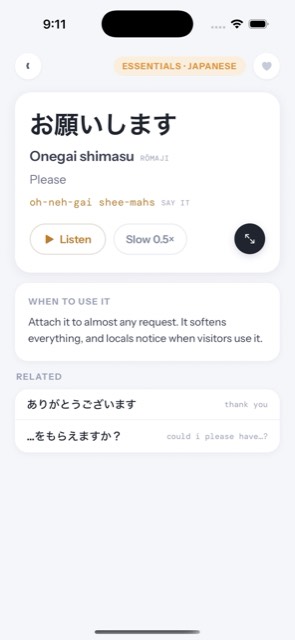
Please
お願いします
Rōmaji Onegai shimasu
oh-neh-gai shee-mahs
Attach it to almost any request. It softens everything, and locals notice when visitors use it.
-
Thank you
ありがとうございます
Rōmaji Arigatō gozaimasu
ah-ree-gah-toh goh-zai-mahs
You can never say it too often. Use it for every small service such as handing over change, bringing a dish, giving directions.
-
Thank you very much
どうもありがとうございます
Rōmaji Dōmo arigatō gozaimasu
doh-moh ah-ree-gah-toh goh-zai-mahs
For when someone has gone out of their way and to show that extra bit of gratitude.
-
You’re welcome
どういたしまして
Rōmaji Dō itashimashite
doh ee-tah-shee-mah-shteh
The universal response to thank you.
The textbook reply — in practice locals often wave it off with a modest “ie ie” (no, no).
-
I’m sorry
ごめんなさい
Rōmaji Gomen nasai
goh-men-nah-sai
For bumping into someone, knocking over a glass, or any small offence.
For real apologies. Small bumps and inconveniences are covered by “sumimasen”.
-
Yes
はい
Rōmaji Hai
hai
Everyone knows when to say yes, and being able to say it in the local language can be a really helpful way to navigate social interactions.
-
No
いいえ
Rōmaji Iie
ee-eh
Similar to yes, everyone knows when to use it and being able to say it in the local language can help across all sorts of situations.
A blunt no is rare in Japan, refusals often arrive as “chotto…” (it’s a bit…) with an apologetic tilt of the head.
-
Okay
大丈夫です
Rōmaji Daijōbu desu
dai-joh-boo dess
An all-purpose acknowledgement whether you’re confirming a price, a meeting point, a plan. Generally used the same way across languages.
A wonder-word: it’s fine, I’m fine, no thank you, meaning rides on tone and context.
-
Perfect
いいですね
Rōmaji Ii desu ne
ee dess neh
Warmer than a plain “okay”, and a great way to show you’re happy with a suggestion, a price, or a plan.
-
That works for me
それで大丈夫です
Rōmaji Sore de daijōbu desu
soh-reh deh dai-joh-boo dess
Accepting a suggestion — a later table, a different room, an earlier train. Signals easy-going agreement.
-
No problem
問題ないです
Rōmaji Mondai nai desu
mon-dai nai dess
Reassuring someone who apologises, or waving off a small inconvenience. Keeps the mood light on both sides.
-
One moment, please
ちょっと待ってください
Rōmaji Chotto matte kudasai
choh-toh maht-teh koo-dah-sai
Buying yourself a few seconds when digging for your wallet, checking your phone, or holding a shop queue while you decide. Locals will be more patient when you can ask it in the local language
-
Could you help me, please?
手伝っていただけますか?
Rōmaji Tetsudatte itadakemasu ka?
teh-tsoo-daht-teh ee-tah-dah-keh-mahs kah
The polite way to open any request for assistance. Locals will be even more enthused to help when you ask it in their language.
Greetings
-
Hello
こんにちは
Rōmaji Konnichiwa
kon-nee-chee-wah
A must know in every language. A “hello” in the local language tends to get smiles, open doors, and has locals more eager to help.
-
Hi
どうも
Rōmaji Dōmo
doh-moh
The casual “hello” for friends, colleagues, and anyone you know well. A friendly opener that works in most situations.
The casual nod-greeting — also a light thanks. Enormously versatile.
-
Good morning
おはようございます
Rōmaji Ohayō gozaimasu
oh-hah-yoh goh-zai-mahs
Use it until around midday. A warm way to greet hotel staff, waiters and shopkeepers at the start of the day.
Used until about 10–11 am. Drop the “gozaimasu” only with people you know well.
-
Good afternoon
こんにちは
Rōmaji Konnichiwa
kon-nee-chee-wah
For the stretch between lunch and sunset, in languages that use it. If you’re unsure of the cutoff, locals will forgive you either way.
“Konnichiwa” literally is the daytime greeting — Japanese has no separate word for afternoon.
-
Good evening
こんばんは
Rōmaji Konbanwa
kon-bahn-wah
The greeting for later in the day — walking into a restaurant for dinner, or checking in after dark.
-
Goodbye
さようなら
Rōmaji Sayōnara
sah-yoh-nah-rah
Leaving a shop, ending a chat, stepping out of a taxi. Locals will notice when you say it in their language, and it’s a nice way to close any encounter.
Carries a whiff of finality — for everyday partings locals say “ja, mata” (well, see you) or just bow.
- Everyday じゃ、また Ja, mata jah mah-tah
-
See you later
またね
Rōmaji Mata ne
mah-tah-neh
The friendly farewell for people you’ll cross paths with again such as hotel staff, your regular barista, new acquaintances.
-
Have a good day
よい一日を
Rōmaji Yoi ichinichi o
yoy ee-chee-nee-chee oh
A warm sign-off after any small exchange. A great one to know in any language because locals will always appreciate it after an interaction.
-
My name is [name]
[名前]です
Rōmaji [namae] desu
[nah-mah-eh] dess
It’s always useful being able to introduce yourself in the local language. A great way to build friends in your travels.
Family name first is the Japanese convention, but visitors introducing themselves however they like is completely fine.
- Formal [名前]と申します [namae] to mōshimasu [nah-mah-eh] toh moh-shee-mahs
-
How are you?
お元気ですか?
Rōmaji O-genki desu ka?
oh-gen-kee dess kah
The polite version for strangers and staff. In a lot of countries it’s seen as a genuine question, so be ready for a real answer.
Not casual filler in Japan — it’s a real question for people you haven’t seen in a while.
-
I’m well, thank you
元気です、ありがとうございます
Rōmaji Genki desu, arigatō gozaimasu
gen-kee dess, ah-ree-gah-toh goh-zai-mahs
The standard reply to “How are you?”. Bounce the question back with a smile and you’ve just had your first conversation!
-
Nice to meet you
はじめまして
Rōmaji Hajimemashite
hah-jee-meh-mah-shteh
Always a great one to say when meeting someone new on your travels. Knowing it in the local language is a nice touch that locals will appreciate.
Often followed by “yoroshiku onegaishimasu” — an untranslatable request for good relations. Add it and impress everyone.
Also in the app
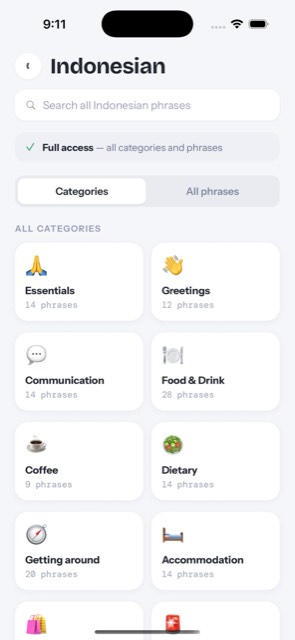
Nine more categories, 132 further Japanese phrases:
- Communication 14
- Food & Drink 28
- Coffee 8
- Dietary 14
- Getting around 20
- Accommodation 14
- Shopping 10
- Emergency 17
- Social 7